5 Signs It's Time to Replace Your Gutters

When was the last time you looked at your gutters?


If you're like most homeowners in Western Massachusetts, it's probably been a while. However, your gutters play a significant role in protecting your home from water damage — especially around here, where we experience a range of weather conditions, from heavy spring rains to melting snow and falling autumn leaves.


At Sexton Roofing & Siding, we've seen firsthand how neglected gutters can lead to more significant (and costly) problems. So, to help you stay ahead of the game, here are five signs it might be time to replace your gutters.


1. Sagging or Pulling Away from the House

If your gutters are starting to sag or pull away from your roofline, it's a sign they're no longer doing their job. This often happens when gutters are clogged, overloaded with debris, or when the fasteners have worn out over time.


Why it matters:

When your gutters sag, they don't drain water properly, which can lead to overflow, siding damage, and foundation issues. If the problem is widespread, it's usually a good time to consider a replacement rather than constant patch-ups.


2. Cracks, Holes, or Rust Spots

A small crack might not seem like a big deal, but it can quickly turn into a larger issue. Water that escapes through cracks, holes, or rust spots can run down your siding, foundation, and landscaping, causing rot and erosion.


Quick tip:

After a storm, take a walk around your home and check for leaks or water dripping where it shouldn't be. If you're spotting multiple problem areas, new gutters might be the best solution.


3. Peeling Paint or Water Stains on the Siding

Do you notice peeling paint or discoloration on your siding beneath the gutters? That's a sign that water is escaping rather than being properly channeled away from your home.


Why it matters:

Over time, this can lead to wood rot, mildew, and damage to your home's exterior. And in our damp, humid New England summers, moisture issues can escalate quickly. New, properly installed gutters will keep water off your walls and preserve your curb appeal.


4. Pooling Water Around Your Foundation

After it rains, could you take a look at the ground around your home? If you notice water pooling near your foundation, it's a red flag. Your gutters and downspouts are designed to direct water away from your house; if they're not doing so, it's time for a fix.


Why it matters:

Standing water around your home can lead to foundation cracks, basement leaks, and landscape erosion. New gutters with properly placed downspouts can prevent this and save you thousands in potential foundation repairs.


5. Signs of Foundation Issues

If you've started noticing cracks in your foundation, damp spots in your basement, or uneven floors, failing gutters could be part of the problem. When water isn't directed away from your home, it can seep into the foundation, causing structural damage over time.

Pro tip:

Preventative maintenance, like replacing old, ineffective gutters, is far more affordable than repairing a cracked foundation down the line.


Time for New Gutters? We've Got You Covered.

If you're spotting any of these warning signs, don't wait! At Sexton Roofing & Siding, we specialize in gutter installation and replacement for homes all across Western Massachusetts. We offer durable, seamless gutter systems designed to withstand our unpredictable New England weather and protect your home year after year.


Contact us today for a free gutter inspection and estimate, and let's make sure your home stays dry, damage-free, and looks great.


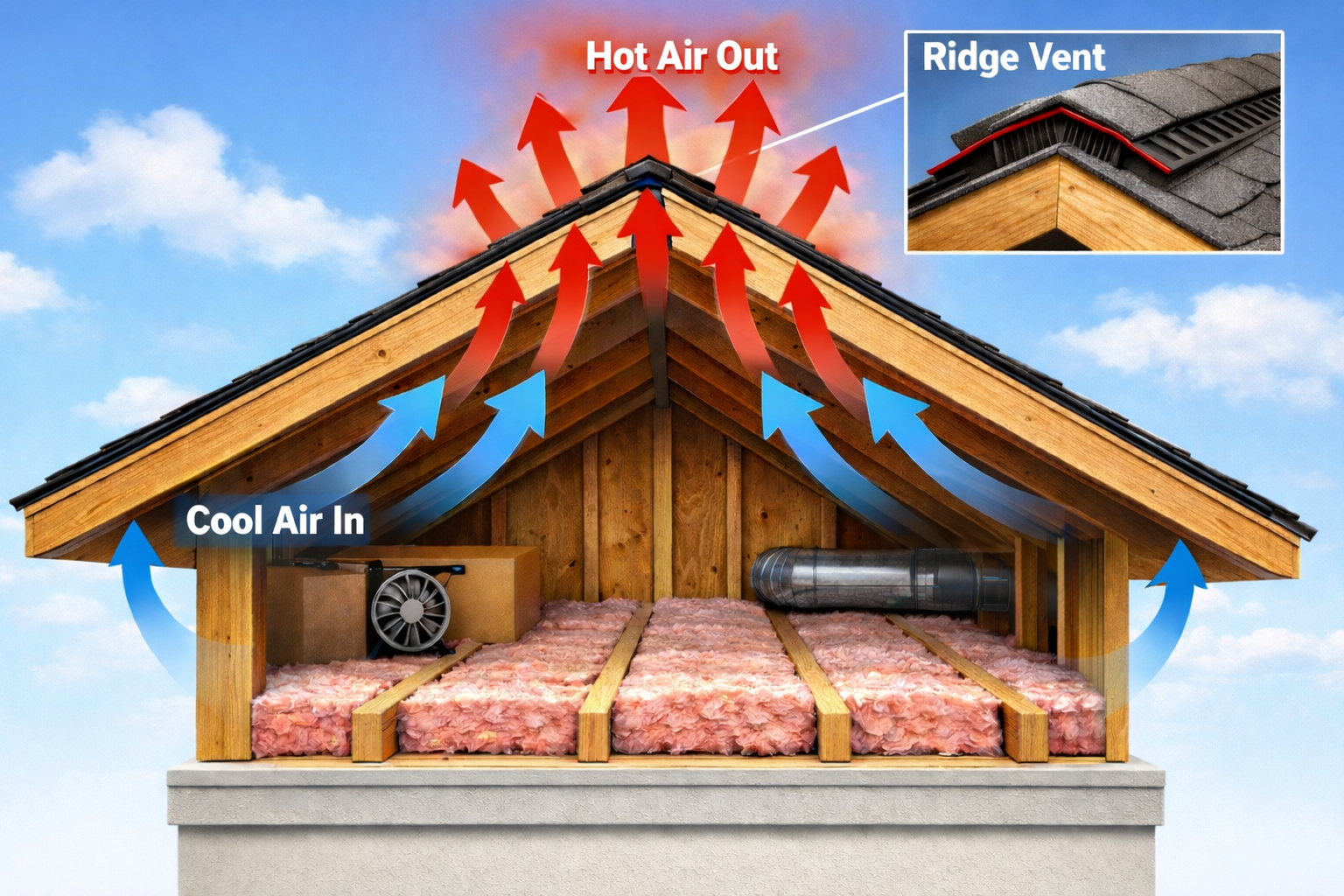
Attic Ventilation
March 7, 2026
Proper roof ventilation extends roof life and prevents moisture damage. Learn why it matters for homeowners in Western Massachusetts.
By Tim Wilde February 9, 2026
Have you ever had a roofer tell you your roof was installed incorrectly? Have you ever had a shingle fall off your roof, but your roof is less than 15 years old? How can a roof be installed incorrectly, and how can a roofer determine that? To answer that, let's talk first about how a shingle is created. Modern architectural shingles (shown here),
asphalt shingle
January 27, 2026
Have you ever wondered what an asphalt shingle is actually made of? No? Come on, just play along for a moment. You might be surprised by how helpful this is, especially when you’re talking to a roofer or trying to make decisions for your own home project. Who knows, maybe you’ll become a roofing expert one day! (Okay… probably not. But you will feel a lot more confident after this.) Let’s take a quick look at what goes into a typical architectural asphalt shingle. Each layer plays an important role: A fiberglass mat An asphalt coating Protective granules A sealant strip Now let’s break it down in a way that actually makes sense. 1. The Core: Fiberglass Mat At the heart of the shingle is the fiberglass mat—the foundation everything else attaches to. Think of it like the shingle’s skeleton. It gives the shingle its shape, strength, and flexibility so it can handle wind, movement, and the changing seasons. But while the fiberglass mat is strong, it can’t stop water on its own. That brings us to the next, and arguably most important, layer. 2. The Waterproofing: Asphalt Coating The fiberglass mat is coated with asphalt on both sides, creating a sort of asphalt “sandwich.” This is the true workhorse of the shingle. Asphalt delivers the waterproofing, protects against hail and debris, and holds everything else together. If the fiberglass is the skeleton, asphalt is the muscle. The only downside? Asphalt ages. Sunlight (especially UV rays) slowly breaks down the chemical binders, and daily temperature swings cause expansion and contraction. Over time, that leads to cracking. Fortunately, the next layer helps protect it. 3. UV Protection & Color: Granules Those colorful little granules on the surface aren’t just for looks. They’re crushed stone coated with ceramic pigments, and they act like sunscreen for the asphalt underneath. They absorb and deflect UV rays, dramatically slowing down the aging process. As a bonus, they give shingles their color. If you’ve ever cleaned your gutters and noticed those little rocks collecting at the bottom, those are the granules doing their thing. 4. The Sealant Strip On the underside of each shingle is a small strip of black sealant. It may look insignificant, but it’s one of the most important parts of the system. Once installed and warmed by the sun, this strip bonds the shingles together, helps seal the nails below, and creates a watertight, wind‑resistant layer. Small strip, huge impact. Here is a photo from the IKO website, www.iko.com 
Show More
Attic Ventilation
March 7, 2026
Proper roof ventilation extends roof life and prevents moisture damage. Learn why it matters for homeowners in Western Massachusetts.
By Tim Wilde February 9, 2026
Have you ever had a roofer tell you your roof was installed incorrectly? Have you ever had a shingle fall off your roof, but your roof is less than 15 years old? How can a roof be installed incorrectly, and how can a roofer determine that? To answer that, let's talk first about how a shingle is created. Modern architectural shingles (shown here),
Show More